Author: smbabbitt

Daylight and Delusion

Daylight and Delusion

You see above an advertisement from the American Luxfer Prism Company that offers a way to bring daylight into buildings. Prisms can be installed horizontally with vault (or pavement or sidewalk) lights, floorlights, and skylights; vertically with bands of prisms in shop fronts; and at an angle, with prism canopies.
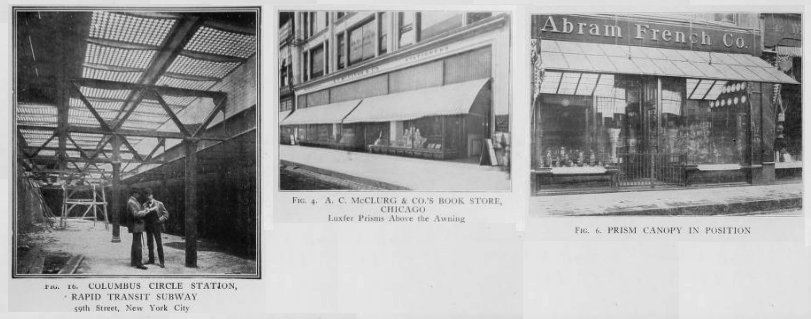
Horizontal, vertical, angled–photos from an American Luxfer Prism Company advertisement, “Sweet’s” Indexed Catalogue of Building Construction, 1906

These devices, similar to the older deck prisms on ships, were popular during the late nineteenth and early twentieth centuries. The prisms provided a solution to the problems of shops and workplaces (and houses with gloomy dining rooms) in the long, narrow spaces typical of desirable city blocks, at a time when gas and electricity were competing as lighting sources. Business owners objected to the cost of artificial lighting, to its effects on merchandise (soot, difficulty of judging colors) and employees (eyestrain that caused clerical errors, lack of healthful sunlight and consequent low spirits). Daylighting offered an economical and seemingly permanent solution to these problems.

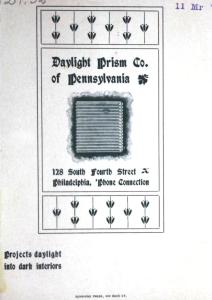
Below is the cover of a fascinating Daylight Prism Company brochure, which is full of photographs of installations in Philadelphia. You can enjoy it on the Internet Archive.  To the right is one of the testimonials in the brochure.
That testimonial was not illustrated. But here is an advertisement for another firm that occupied the building. An enlarged detail has been added.
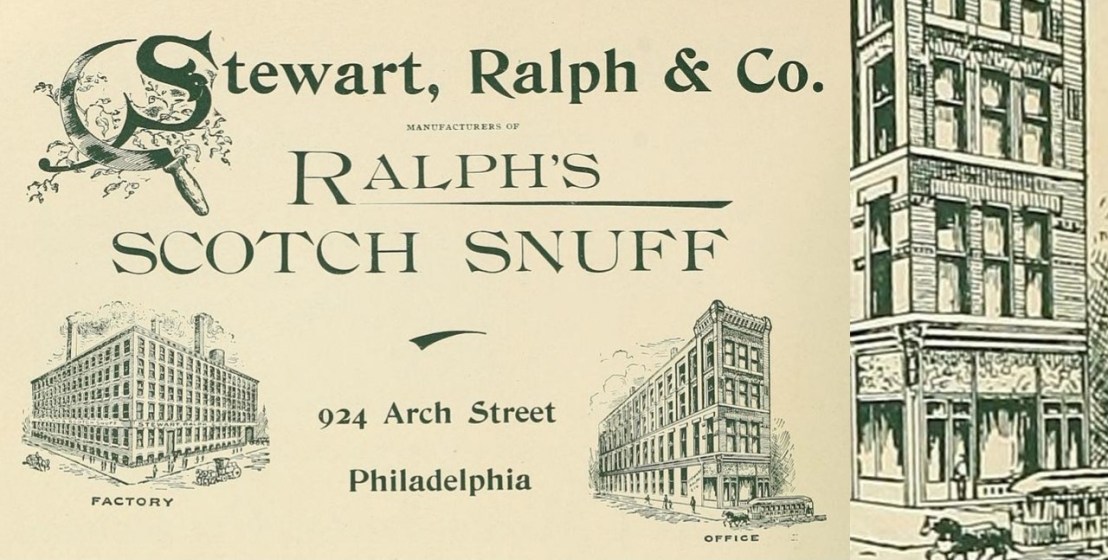
The City of Philadelphia as It Appears in the Year 1894 (detail added)

The window treatment is hard to interpret. But here is a more detailed 1960 photograph of the building, slightly lightened to show the prism installation above the main window.
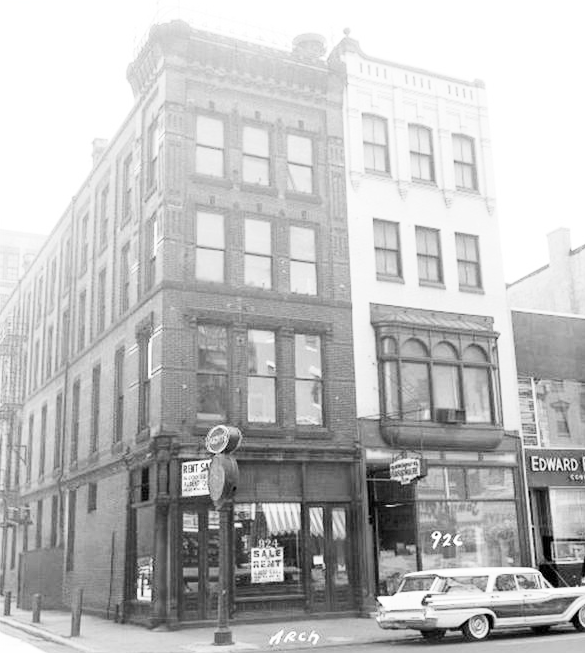
R. Blanck Carollo. Arch Street: 900 Block of Arch Street. Photograph. Philadelphia Department of Public Property-41198-0-. From PhillyHistory.org. http://www.phillyhistory.org/PhotoArchive/Detail.aspx?assetId=89787 (accessed 27 August 2016)

The good news about 924 Arch is that, though the prisms are gone, the handsome building remains, at the southwest corner of Arch and Hutchinson. In addition, it may be that one of the illustrated installations, at the Dobson Mills in Falls of Schuylkill, survived as a feature of the Dobson Mills Apartments complex (see figures 6 and 7 in the gallery of the apartments’ Web site).

These images of lost buildings seem to show prism installations.

This post is a bit of a sideshow, designed to lead you to a page with a longer treatment of the subject (link below), one that includes vault lights (and their bit part in Bell, Book and Candle) and another, more sensational, use of glass, the blue glass cure or blue glass mania, which began with General A. J. Pleasonton of Philadelphia. That is the delusion of the title.

Sunlight and Glass, Pleasonton and Prisms

Venus Rises from the Sea, Wearing Eight Yards of Wet Flannel

Venus Rises from the Sea, Wearing Eight Yards of Wet Flannel

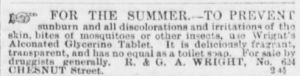
It’s summer in Philadelphia!

You might try to make the best of it at home.

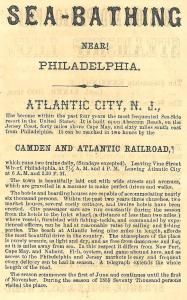
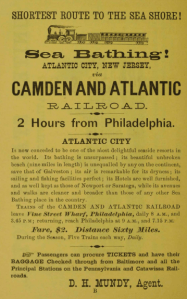
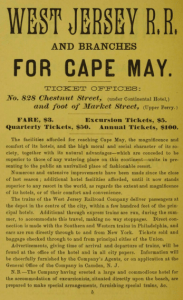
But why not enjoy sea-bathing at the New Jersey shore, only two hours from Philadelphia?

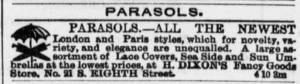
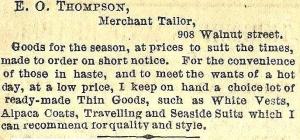
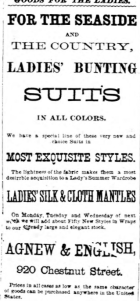
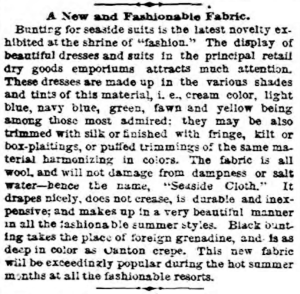
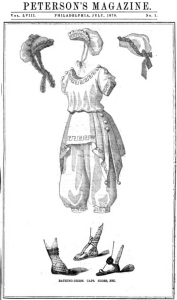
What was a seaside, by the way? I could not find any images, but it was clearly something like a parasol. And what did these early bathing costumes look like?

The owner of the striking Grecian ensemble might have preferred to be seen rather than submerged. But how many of those little hats and sandals―and waterlogged women―were swept out to sea?

You Must Take the Red Car

You Must Take the Red Car

A long page grew out of this much shorter post. The Web page on this site is called “Navigation.” This post could have a fancier title; for example, “How Transportation Transforms Our View of Geography.” We know that the way we travel shapes our ideas of location and distance. One example is this joke: “You’re from New Jersey? Which exit?” A second would be the tie between Sugar Hill and the “A” train; we evade the landscape by zipping along under or above it, so that a destination is the place on the route where we return to the landscape. A third comes from an imaginary but typical conversation with a friend who lives in the Greater Northeast. The friend has found a fabulous new diner or thrift store. “But how far away is it?” “Two buses.”

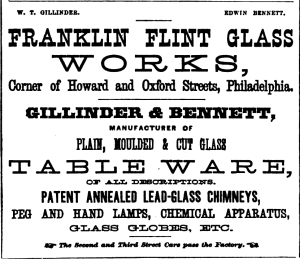
In the middle of the nineteenth century, the spread of urban public transportation with fixed routes and schedules provided a new, if supplementary, way of giving locations. In 1867, when a new version of Edwin T. Freedley’s Philadelphia and Its Manufactures (with advertisements!) appeared, the hundreds of omnibus cars of the late 1850s had been replaced with street cars―still drawn by horses, but drawn more smoothly and quickly along a rail. Some of Freedley’s advertisements give, in addition to street addresses, directions that are also standardized, because they are based on passenger car routes. Customers are advised to take a public street car to a factory that makes elegant private carriages. That seems ironic, like using a computer to buy a manual typewriter, though it probably reflects enduring class distinctions as well as the difference between pleasure and display, and the need to get from one place to another.

Some companies advertised their street-car connections visually rather than in words. They show, not a generic bustling street scene, but the very line that passed the company.

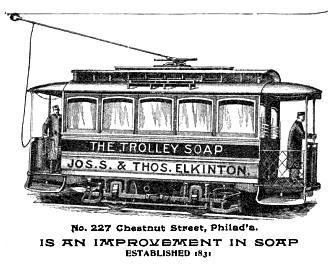
The Trolley Soap advertisement (from The Reporter’s Nosegay, 1896) jumps ahead into the last years of the century, but I could not resist it.

Navigation Continued: “Marks and Numbers of Streets,” from the Philadelphia PUBLIC LEDGER, 1836

Introduction

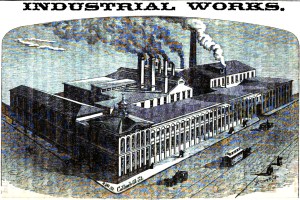
Advertising is associated with manipulation and outright deception, but advertisements for local businesses are obliged to offer sober fact as well. During the period of Philadelphia’s industrial glory, that obligation was accepted with enthusiasm. Businesses accumulated particulars like a Victorian furnishing a parlor: lists of products and services, testimonials, and sketches of products or properties, as in the wonderful specimen below. The information in these advertisements is a historical source like any other, though unusually tidy and concise. The material can usually be allowed to speak for itself.

To begin, here (see menu above or complete links below the figure) is a first set of galleries arranged by subject. Some have serious themes: the pervasiveness of mourning customs; the mushrooming of small businesses in the shade of a great invention; the unmistakable new look of the 1920s. Some are just for fun.

Click on an image to see the advertisements in a slide show. Galleries will be added as inspiration strikes. In addition to the pages here, there are less weighty posts; please have a look at them.

Office Party: Diversion from Dennison and Others

Daylight and Delusion

Venus Rises from the Sea, Wearing Eight Yards of Wet Flannel

You Must Take the Red Car

“Somehow it seems to fill my head with ideas”: Startling Specimens in the Type Catalogues of MacKellar, Smiths & Jordan

The Fictional Life and the Afterlife of TOWN CRIER OF PHILADELPHIA

The TOWN CRIER and the Talkies: Jay Emanuel and Other Reel Fellows

Marks, Manicules, and Markland: Street Signage in Nineteenth-Century Philadelphia

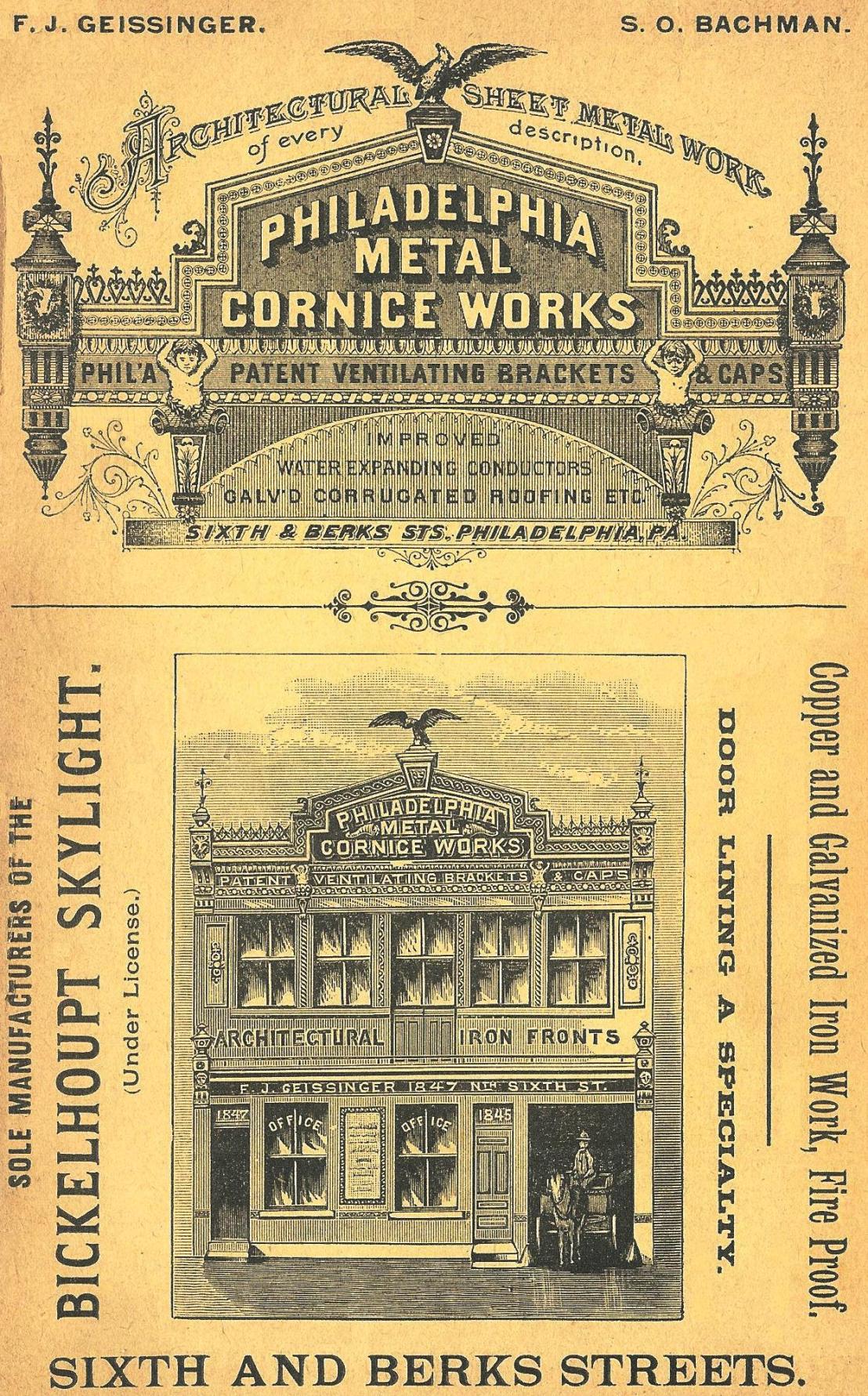
FJ Geissinger, Phila Metal Cornice Works, Bickelhoupt Skylight 1847 6n at Berks 1890 CD.jpg
Boyd’s Business Directory, 1890

Mourning

Dress

Preparation

Photographs

Flowers

Rituals

Grave Site

Monuments

The Civil War

Factory Conversion or Diversion

Palmer’s Patent Limbs

Incidents, Examples, and Aftermath

The 1920s

Time Machine Wish List

Odd Electricities

Cycling

Navigation

Sunlight and Glass, Pleasonton and Prisms

Dismantling the Centennial

Kitty Foyle and Philadelphia, the “grand homey old town”

Worth Looking Into

For inquiries, please write to contact@philadelphiaasadvertised.com or philad49@gmail.com. If you are looking for a particular advertisement, let me know. A large and somewhat shaggy database of Philadelphia locations is also available to anyone who might benefit from it.